
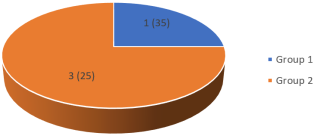
Background: Bladder cancer (BC) and benign prostatic hyperplasia (BPH) commonly coexist in elderly men, often necessitating transurethral resection of bladder tumor (TURBT) and transurethral resection of the prostate (TURP). Concerns have historically existed regarding the oncological safety of performing both procedures simultaneously, particularly due to the theoretical risk of tumor cell implantation in the prostatic fossa. Objective: To evaluate the oncological safety of simultaneous TURBT and TURP, with special emphasis on overall recurrence and prostatic urethral recurrence. Methods: This prospective observational study included 60 patients treated at the Department of Urology, Satkhira Medical College Hospital, from September 2023 to March 2025. Among them, 35 patients underwent simultaneous TURBT and TURP (Group 1), and 25 underwent TURBT alone (Group 2). Clinical, pathological, and follow-up data were analyzed using SPSS version 22. Student’s t-test and Chi-square or Fisher’s exact test were applied as appropriate. Statistical significance was set at p < 0.05. Results: Recurrence was observed in 11.4% of patients in the simultaneous group compared to 28.0% in the TURBT-only group; however, the difference was not statistically significant (p = 0.102). Prostatic fossa recurrence showed no significant difference between groups. Postoperative complications were comparable. Conclusion: Simultaneous TURBT and TURP is oncologically safe and does not increase recurrence risk. It can be considered a feasible surgical approach in appropriately selected patients.
| Published in | International Journal of Clinical Urology (Volume 10, Issue 1) |
| DOI | 10.11648/j.ijcu.20261001.20 |
| Page(s) | 53-60 |
| Creative Commons |
This is an Open Access article, distributed under the terms of the Creative Commons Attribution 4.0 International License (http://creativecommons.org/licenses/by/4.0/), which permits unrestricted use, distribution and reproduction in any medium or format, provided the original work is properly cited. |
| Copyright |
Copyright © The Author(s), 2026. Published by Science Publishing Group |
Bladder Cancer, TURBT, TURP, Prostatic Fossa Recurrence, Oncological Safety
Variable | Group 1 (TURBT+TURP) n=35 | Group 2 (TURBT) n=25 | p-value |
|---|---|---|---|
Age (years), mean ± SD | 63.91 ± 11.18 | 58.72 ± 11.65 | 0.277 (NS) |
Prostate volume (gm), mean ± SD | 46.78 ± 27.14 | 25.28 ± 5.38 | 0.106 (NS) |
BMI Category, n (%) | |||
Underweight | 7 (20.0%) | 8 (32.0%) | 0.423 (NS) |
Normal weight | 27 (77.1%) | 17 (68.0%) | |
Overweight | 1 (2.9%) | 0 (0.0%) | |
Smoking Status, n (%) | |||
Smoker | 31 (88.6%) | 23 (92.0%) | 0.508 (NS) |
Non-smoker | 4 (11.4%) | 2 (8.0%) | |
Variable | Group 1 (n=35) | Group 2 (n=25) | p-value |
|---|---|---|---|
T Stage, n (%) | |||
T1 | 34 (97.1%) | 20 (80.0%) | 0.038 (S) |
Ta | 1 (2.9%) | 5 (20.0%) | |
Histological Grade, n (%) | |||
Low grade | 29 (82.9%) | 19 (76.0%) | 0.235 (NS) |
High grade | 6 (17.1%) | 4 (16.0%) | |
PUNLMP | 0 (0.0%) | 2 (8.0%) | |
Tumor Size, n (%) | |||
≤3 cm | 21 (60.0%) | 14 (56.0%) | 0.757 (NS) |
>3 cm | 14 (40.0%) | 11 (44.0%) | |
Multifocality, n (%) | |||
Solitary | 29 (82.9%) | 19 (76.0%) | 0.513 (NS) |
Multifocal | 6 (17.1%) | 6 (24.0%) | |
Therapy | Group 1 (n=35) | Group 2 (n=25) | p-value |
|---|---|---|---|
BCG | 4 (11.4%) | 5 (20.0%) | 0.359 (NS) |
Chemotherapy (Mitomycin) | 31 (88.6%) | 20 (80.0%) |
Variable | Group 1 (n=35) | Group 2 (n=25) | p-value |
|---|---|---|---|
Yes | 4 (11.4%) | 7 (28.0%) | 0.102 (NS) |
No | 31 (88.6%) | 18 (72.0%) |
Recurrence Site | Group 1 | Group 2 | p-value |
|---|---|---|---|
Lateral wall | 2 (50.0%) | 2 (28.6%) | 0.576 (NS) |
Posterior wall | 1 (25.0%) | 2 (28.6%) | 1.000 (NS) |
Prostatic fossa | 1 (25.0%) | 3 (42.9%) | 1.000 (NS) |
Complication | Group 1 (n=35) | Group 2 (n=25) | p-value |
|---|---|---|---|
Bladder neck contracture | 1 (2.9%) | 0 (0.0%) | 0.155 (NS) |
Clot retention | 0 (0.0%) | 1 (4.0%) | |
Blood transfusion | 8 (22.9%) | 1 (4.0%) | |
UTI | 4 (11.4%) | 2 (8.0%) | |
No complication | 22 (62.9%) | 21 (84.0%) |
BC | Bladder Cancer |
BPH | Benign Prostatic Hyperplasia |
BOO | Bladder Outlet Obstruction |
BCG | Bacillus Calmette–Guérin |
BMI | Body Mass Index |
CBC | Complete Blood Count |
CIS | Carcinoma in Situ |
EAU | European Association of Urology |
IRB | Institutional Review Board |
LUTS | Lower Urinary Tract Symptoms |
NMIBC | Non–Muscle Invasive Bladder Cancer |
PUNLMP | Papillary Urothelial Neoplasm of Low Malignant Potential |
SPSS | Statistical Package for the Social Sciences |
TURBT | Transurethral Resection of Bladder Tumor |
TURP | Transurethral Resection of the Prostate |
UTI | Urinary Tract Infection |
BNC | Bladder Neck Contracture |
| [1] | Siegel RL, Miller KD, Jemal A. Cancer statistics, 2017. CA Cancer J Clin. 2017; 67(1): 7–30. |
| [2] | Babjuk M, Böhle A, Burger M, Capoun O, Cohen D, Compérat EM, et al. EAU guidelines on non–muscle-invasive urothelial carcinoma of the bladder: 2019 update. Eur Urol. 2019; 76(5): 639–657. |
| [3] | Dalbagni G. The management of superficial bladder cancer. Nat Clin Pract Urol. 2007; 4(5): 254–260. |
| [4] | Babjuk M, Böhle A, Burger M, Capoun O, Cohen D, Compérat EM, et al. EAU guidelines on non–muscle-invasive urothelial carcinoma of the bladder: update 2016. Eur Urol. 2017; 71(3): 447–461. |
| [5] | Gratzke C, Bachmann A, Descazeaud A, Drake MJ, Madersbacher S, Mamoulakis C, et al. EAU guidelines on the assessment of non-neurogenic male lower urinary tract symptoms including benign prostatic obstruction. Eur Urol. 2015; 67(6): 1099–1110. |
| [6] | Hollingsworth JM, Wilt TJ. Lower urinary tract symptoms in men. BMJ. 2014; 349: g4474. |
| [7] | Teo JS, Lee YM, Ho HSS. An update on transurethral surgery for benign prostatic obstruction. Asian J Urol. 2017; 4(3): 195–198. |
| [8] | Braeckman J, Denis L. Management of BPH then 2000 and now 2016 – From BPH to BPO. Asian J Urol. 2017; 4(3): 138–147. |
| [9] | Burger M, Catto JWF, Dalbagni G, Grossman HB, Herr H, Karakiewicz P, et al. Epidemiology and risk factors of urothelial bladder cancer. Eur Urol. 2013; 63(2): 234–241. |
| [10] | Racioppi M, D'Agostino D, Totaro A, Marangi F, Di Gianfrancesco L, D'Addessi A, et al. Value of simultaneous transurethral resection of bladder cancer and prostate: A prospective study. Urol Int. 2013; 90(4): 429–434. |
| [11] | Tsivian A, Shtricker A, Sidi AA, Zilberman DE. Combined TURBT and TURP for patients with bladder tumors and BPH: Is it safe and effective? Urol Int. 2003; 70(4): 317–320. |
| [12] | Ugurlu O, Gonulalan U, Adsan O, Kosan M, Oztekin V, Cetinkaya M. Effects of simultaneous transurethral resection of prostate and solitary bladder tumors smaller than 3 cm on oncologic results. Urology. 2007 Jul 1; 70(1): 55-9. |
| [13] | Herr HW. Tumour progression and survival in patients with T1G3 bladder tumours: 15-year outcome. Br J Urol. 1997; 80(6): 762–765. |
| [14] | Cambier S, Sylvester RJ, Collette L, Gontero P, Brausi MA, van Andel G, et al. EORTC nomograms and risk groups for predicting recurrence, progression, and survival in non–muscle-invasive stage Ta–T1 urothelial bladder cancer. Eur Urol. 2016; 69(1): 60–69. |
| [15] | Ham WS, Kim WT, Jeon HJ, Lee DH, Choi YD. Long-term outcome of simultaneous transurethral resection of bladder tumor and prostate. J Urol. 2009; 181(4): 1594–1599. |
| [16] | Jaidane M, Bouicha T, Slama A, Hmida W, Hidoussi A, Sorba NB, et al. Tumor recurrence in prostatic urethra following simultaneous resection. Urology. 2010; 75(6): 1392–1395. |
| [17] | Tan WS, Lamb BW, Kelly JD, Greenwell TJ. The oncological safety of simultaneous transurethral resection of bladder tumour and prostate: A systematic review. Arab J Urol. 2016; 14(2): 144–149. |
| [18] | Muruganandam K, Dorairajan LN, Jain H, Kumar S. Simultaneous TURBT and TURP – Is it safe in patients with bladder tumor and BPH? Urol Ann. 2020; 12(1): 43–47. |
| [19] | Savvides E, Pyrgidis N, Langas G, Symeonidis EN, Dimitriadis G, Sountoulides P. Concomitant endoscopic surgery for bladder tumors and prostatic obstruction: A systematic review and meta-analysis. J Clin Med. 2022; 11(20): 6208. |
| [20] | Kassouf W, Traboulsi SL, Schmitges J, Aprikian AG, Tanguay S. Simultaneous transurethral resection of bladder tumor and prostate: Impact on outcome. Can Urol Assoc J. 2010; 4(1): 17–21. |
| [21] | Islam MA, Mir R, Jinnah MSA, Sweety RA, Rahman MM. Urothelial carcinoma of urinary bladder with histologic grading: A study in a tertiary care hospital, Bangladesh. Int J Med Sci. 2023; 11(3): 746–750. |
| [22] |
Frisbie SH, Mitchell EJ, Yusuf AZM, Siddiq MYA, Ortega R. Climate crisis to increase cancer risk for tens of millions in Bangladesh. The Guardian. 2024 Jan 17. Available from:
https://www.theguardian.com/world/2024/jan/17/climate-crisis-increase-cancer-risk-bangladesh-water |
| [23] | Palou J, Sylvester RJ, Faba OR, Parada R, Peña JA, Algaba F, et al. Female gender and carcinoma in situ in the prostatic urethra are prognostic factors in T1G3 bladder cancer treated with BCG. Eur Urol. 2012; 62(1): 118–125. |
| [24] | Hinman F. Atlas of urologic surgery. Philadelphia: W. B. Saunders Company; 1956. |
| [25] | Kiefer G. Transurethral surgery and tumor cell implantation. J Urol. 1953; 69(3): 420–422. |
| [26] | Luo S, Lin Y, Zhang W. Does simultaneous transurethral resection of bladder tumour and prostate affect the recurrence of bladder tumour? A meta-analysis. J Endourol. 2011; 25(2): 291–296. |
| [27] | Picozzi S, Ricci C, Gaeta M, Ratti D, Casellato S, Bozzini G, et al. Concurrent bladder tumour and benign prostatic hyperplasia: Combined transurethral resection is safe and effective. Urol Int. 2012; 88(1): 27–33. |
| [28] | Li S, Zeng XT, Ruan XL, Wang XH, Guo Y, Yang ZH. Simultaneous transurethral resection of bladder cancer and prostate may reduce recurrence rates: A systematic review and meta-analysis. Experimental and Therapeutic Medicine. 2012 Oct; 4(4): 685-92. |
| [29] | Laukhtina E, Mori K, Mostafaei H, Motlagh RS, Pradere B, Quhal F, et al. Oncological outcomes of simultaneous transurethral resection of bladder tumour and prostate in patients with bladder cancer and benign prostatic hyperplasia: A multicentre observational study. BJU Int. 2023; 131(1): 89–97. |
| [30] | Sylvester RJ, van der Meijden APM, Oosterlinck W, Witjes JA, Bouffioux C, Denis L, et al. Predicting recurrence and progression in individual patients with stage Ta T1 bladder cancer using EORTC risk tables: A combined analysis of 2596 patients from seven EORTC trials. Eur Urol. 2006; 49(3): 466–475. |
| [31] | Babjuk M, Burger M, Comperat EM, Gontero P, Liedberg F, Masson-Lecomte A, et al. European Association of Urology guidelines on non-muscle-invasive bladder cancer (Ta, T1, and carcinoma in situ) – 2022 update. Eur Urol. 2022; 81(1): 75–94. |
| [32] | Gofrit ON, Shapiro A, Katz R, Pizov G, Landau EH, Pode D, et al. Combined transurethral resection of bladder tumour and prostate is a safe and time-saving approach. J Urol. 2006; 175(5): 1880–1882. |
| [33] | Hammad FT, Al-Hammadi A, Al-Hammadi N. Combined TURBT and TURP in patients with bladder cancer and coexisting benign prostatic hyperplasia: Is it safe? Int Urol Nephrol. 2013; 45(1): 121–126. |
| [34] | Yoshimura K, Uemura H, Tsukamoto T, et al. Health-related quality of life in patients with NMIBC: A multicenter prospective study. Int J Urol. 2005; 12(11): 1032–1038. |
APA Style
Haque, M., Rasiduzzaman, Ahmed, R., Islam, M., Sharif, A. B. M., et al. (2026). Simultaneous TURP and TURBT Is Oncologically Safe. International Journal of Clinical Urology, 10(1), 53-60. https://doi.org/10.11648/j.ijcu.20261001.20
ACS Style
Haque, M.; Rasiduzzaman; Ahmed, R.; Islam, M.; Sharif, A. B. M., et al. Simultaneous TURP and TURBT Is Oncologically Safe. Int. J. Clin. Urol. 2026, 10(1), 53-60. doi: 10.11648/j.ijcu.20261001.20
@article{10.11648/j.ijcu.20261001.20,
  author = {Mozzammel Haque and Rasiduzzaman and Ramiz Ahmed and Mohidul Islam and Abu Bakar Mamun Sharif and Sharmin Firoj},
  title = {Simultaneous TURP and TURBT Is Oncologically Safe},
  journal = {International Journal of Clinical Urology},
  volume = {10},
  number = {1},
  pages = {53-60},
  doi = {10.11648/j.ijcu.20261001.20},
  url = {https://doi.org/10.11648/j.ijcu.20261001.20},
  eprint = {https://article.sciencepublishinggroup.com/pdf/10.11648.j.ijcu.20261001.20},
  abstract = {Background: Bladder cancer (BC) and benign prostatic hyperplasia (BPH) commonly coexist in elderly men, often necessitating transurethral resection of bladder tumor (TURBT) and transurethral resection of the prostate (TURP). Concerns have historically existed regarding the oncological safety of performing both procedures simultaneously, particularly due to the theoretical risk of tumor cell implantation in the prostatic fossa. Objective: To evaluate the oncological safety of simultaneous TURBT and TURP, with special emphasis on overall recurrence and prostatic urethral recurrence. Methods: This prospective observational study included 60 patients treated at the Department of Urology, Satkhira Medical College Hospital, from September 2023 to March 2025. Among them, 35 patients underwent simultaneous TURBT and TURP (Group 1), and 25 underwent TURBT alone (Group 2). Clinical, pathological, and follow-up data were analyzed using SPSS version 22. Student’s t-test and Chi-square or Fisher’s exact test were applied as appropriate. Statistical significance was set at p < 0.05. Results: Recurrence was observed in 11.4% of patients in the simultaneous group compared to 28.0% in the TURBT-only group; however, the difference was not statistically significant (p = 0.102). Prostatic fossa recurrence showed no significant difference between groups. Postoperative complications were comparable. Conclusion: Simultaneous TURBT and TURP is oncologically safe and does not increase recurrence risk. It can be considered a feasible surgical approach in appropriately selected patients.},
 year = {2026}
}
TY  - JOUR
T1  - Simultaneous TURP and TURBT Is Oncologically Safe
AU  - Mozzammel Haque
AU  - Rasiduzzaman
AU  - Ramiz Ahmed
AU  - Mohidul Islam
AU  - Abu Bakar Mamun Sharif
AU  - Sharmin Firoj
Y1  - 2026/03/26
PY  - 2026
N1  - https://doi.org/10.11648/j.ijcu.20261001.20
DO  - 10.11648/j.ijcu.20261001.20
T2  - International Journal of Clinical Urology
JF  - International Journal of Clinical Urology
JO  - International Journal of Clinical Urology
SP  - 53
EP  - 60
PB  - Science Publishing Group
SN  - 2640-1355
UR  - https://doi.org/10.11648/j.ijcu.20261001.20
AB  - Background: Bladder cancer (BC) and benign prostatic hyperplasia (BPH) commonly coexist in elderly men, often necessitating transurethral resection of bladder tumor (TURBT) and transurethral resection of the prostate (TURP). Concerns have historically existed regarding the oncological safety of performing both procedures simultaneously, particularly due to the theoretical risk of tumor cell implantation in the prostatic fossa. Objective: To evaluate the oncological safety of simultaneous TURBT and TURP, with special emphasis on overall recurrence and prostatic urethral recurrence. Methods: This prospective observational study included 60 patients treated at the Department of Urology, Satkhira Medical College Hospital, from September 2023 to March 2025. Among them, 35 patients underwent simultaneous TURBT and TURP (Group 1), and 25 underwent TURBT alone (Group 2). Clinical, pathological, and follow-up data were analyzed using SPSS version 22. Student’s t-test and Chi-square or Fisher’s exact test were applied as appropriate. Statistical significance was set at p < 0.05. Results: Recurrence was observed in 11.4% of patients in the simultaneous group compared to 28.0% in the TURBT-only group; however, the difference was not statistically significant (p = 0.102). Prostatic fossa recurrence showed no significant difference between groups. Postoperative complications were comparable. Conclusion: Simultaneous TURBT and TURP is oncologically safe and does not increase recurrence risk. It can be considered a feasible surgical approach in appropriately selected patients.
VL  - 10
IS  - 1
ER  -
Department of Urology, Satkhira Medical College Hospital, Satkhira, Bangladesh
Department of Urology, Satkhira Medical College Hospital, Satkhira, Bangladesh
Department of Urology, Satkhira Medical College Hospital, Satkhira, Bangladesh
Department of Urology, Satkhira Medical College Hospital, Satkhira, Bangladesh
Department of Urology, Satkhira Medical College Hospital, Satkhira, Bangladesh
Department of Urology, Satkhira Medical College Hospital, Satkhira, Bangladesh




 Share This Article
 Twitter
 Linked In
 Facebook
 Copy
Copy Download